Manufacturer vs Distributor: Which Gym Equipment Supply Model Fits Commercial Enterprises?

Sep 16, 2026
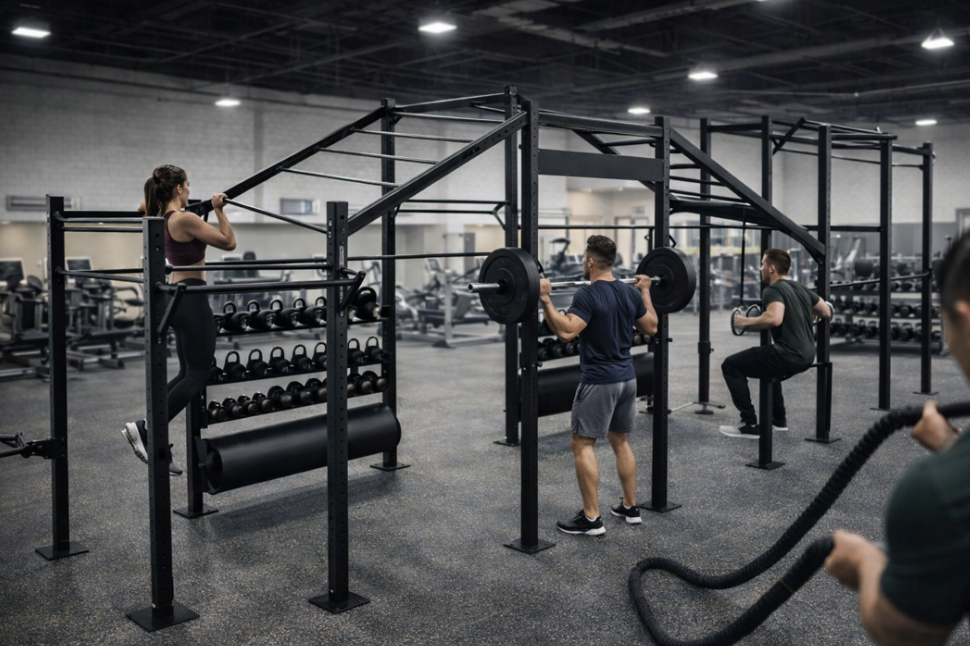


Nantong, Jiangsu Sep 15, 2026 (Issuewire.com) - Here is a question many procurement managers ask before signing a purchase order: is it smarter to buy directly from the factory, or to source through a distributor sitting closer to home? The answer shapes budgets, delivery schedules, and even how a new fitness floor looks on opening day. Commercial buyers rarely order a single machine; they plan a full room, and the sourcing route affects every piece in it. Choosing the right gym equipment supply model matters because the sticker price rarely tells the whole story.

On one side sits the manufacturer, the party that builds racks, machines, and free-weight lines from raw steel. On the other sits the distributor, the party that keeps stock on hand and covers the last mile to the gym door. Each carries its own strengths, costs, and timelines. Understanding how these two roles divide the work makes it far easier to plan a purchase that fits real operating conditions.

Mapping the Supply Chain: Two Roles on One Line

The simplest way to think about it: the factory makes the product, and the distributor handles inventory and final delivery. Both sit on the same supply chain, yet they solve different problems.

A manufacturer such as Senfeng (Nantong Senfeng Sports Products Co., Ltd.) works at the production end, turning drawings and specifications into finished commercial gym equipment. A distributor, by contrast, buys in advance, stores goods locally, and ships smaller quantities on short notice.

Buyers frequently confuse two numbers here. The first is the ex-works price, meaning the cost of goods as they leave the factory. The second is the landed cost, meaning everything added on the way to the gym: ocean freight, customs clearance, local warehousing, and inland transport. A low factory quote can still turn into a higher final figure once these steps stack up, so it pays to compare total cost rather than unit price alone.

Counting the Hidden Numbers, Not Just the Unit Price

Factory-direct buying usually offers a lower base price, plus the freedom to customize color, logo, and dimensions. The trade-off is responsibility: the buyer takes on freight, clearance, and storage. Distributor buying carries a higher unit price and a fixed catalog of SKUs, but it rewards the buyer with ready stock, quick handover, and easy returns.

Consider a single Smith Machine as an example. Ordered factory-direct, the timeline runs through production, quality inspection, packing, ocean shipping, port clearance, and inland delivery before the machine reaches the training floor. That path ties up capital for weeks and asks the buyer to manage several handoffs. Ordered from a local distributor, the same machine can move from a nearby warehouse to the gym in days, though at a higher price and with less room to adjust the specification.

Neither route is simply better. The right choice depends on how much cash a company can commit up front and how long it can wait.

Matching the Route to the Situation

A few clear patterns help guide the decision.

  • New Full Fit-Outs: A newly opening chain or corporate gym that needs a full fit-out often benefits from the factory-direct route. Ordering everything at once keeps the visual identity consistent across every rack and bench, and it locks in a matched source for future spare parts.
  • Restocking and Repairs: A facility that already runs equipment and only needs restocking or urgent repair parts often leans toward a distributor. When a cable snaps or a seat pad wears out, waiting for a full production cycle is not realistic.
  • A Mixed Approach: A middle path works well for many operators. Main machines come factory-direct for cost and customization, while wear parts such as handles, cables, and seat pads come through a distributor for speed.

Framing the question this way keeps attention on operational needs rather than on price tags alone.

Why Senfeng Fits the Factory-Direct Route

For companies leaning toward direct sourcing, a capable gym equipment supplier removes much of the friction. Nantong Senfeng Sports operates its own production line across a facility of around 12,000 square meters, which supports both large single orders and mid-sized commercial projects. This scale matters because it shows factory-direct sourcing is not reserved only for full-container buyers.

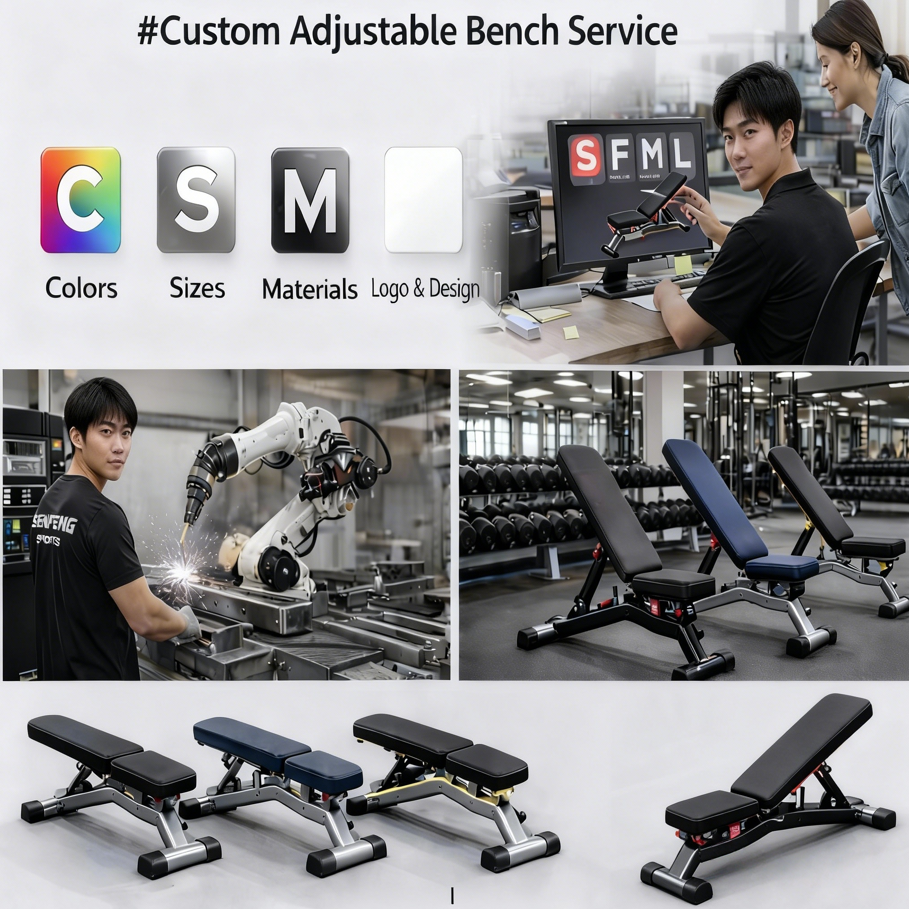
Flexible order handling adds further value. As a self-producing and self-selling factory, Senfeng accepts a low minimum order quantity and supports both wholesale and retail partnerships. A team can request samples or submit drawings for review, and product color and size can be adjusted to match a project's requirements. This means a mid-sized order can still receive genuine customization rather than a fixed, take-it-or-leave-it catalog.

Packaging plays a quieter but real part too. Knock-down (KD) packing reduces the shipping volume of bulky machines, which helps control ocean freight cost per unit. Combined with more than eight years of production experience, quality inspections carried out before shipment, and available OEM and ODM support, these details make the factory route practical for buyers who want customization without giving up dependable output.

Response time rounds out the picture. Senfeng offers 24-hour service with quick replies, so drawings, samples, and specification questions move forward without long gaps. For a mid-sized commercial project, that steady communication often matters as much as the price itself when planning a rollout.

Choosing With Clear Eyes

Factory-direct and distributor models each carry genuine strengths. The manufacturer route rewards buyers who value lower base cost, deep customization, and a single matched source across a full set of gym equipment. The distributor route rewards buyers who value speed, small quantities, and simple returns.

The deciding factors come down to a company's own warehouse capacity, its restocking rhythm, and how much delivery lead time it can absorb. A business with storage room and a planned opening date has different needs from one patching a busy floor mid-season. Weighing these against the gym equipment supply model on offer, rather than reacting to unit price alone, leads to steadier purchasing decisions.

Enterprises weighing their next order are welcome to send an inquiry or explore the product range and factory details in more depth. More information is available at https://senfengfitness.com/
Media Contact

Nantong Senfeng Sports Products Co., Ltd


*****@ntsfsports.com

+86 19514497849

https://senfengfitness.com/

Source :Nantong Senfeng Sports Products Co., Ltd

This article was originally published by IssueWire. Read the original article here.

More News

Kelana Jaya LRT route disruption: Rapid Rail restoring service
Oct 15, 2024

Kelana Jaya LRT route disruption: Rapid Rail restoring service

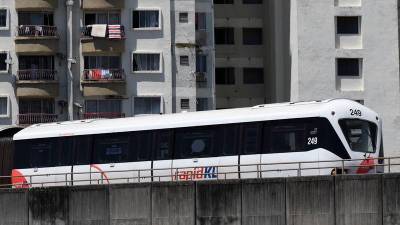
KUALA LUMPUR: Repair works are being carried out following a service disruption on the Kelana Jaya LRT Line, involving the track between Wangsa Maju and Sri Rampai Stations, which was caused by an unusual flow of rainwater that damaged several track components, said Rapid Rail Sdn Bhd (Rapid Rail). Rapid Rail as the operator of the Rapid KL rail service in a statement said that the incident occurred at 10.20 am which forced the operation to stop the power supply in the area involved to allow inspection and repair work to be carried out. “Repair works are being actively carried out by Rapid Rail’s technical team to ensure that services can be restored soon,“ according to the statement. For now, a feeder service has been activated between Gombak Station and Wangsa Maju Station. Trains from the direction of Putra Heights will turn back at Wangsa Maju Station. A total of 12 free feeder buses at a frequency of every 15 minutes are operating to ensure that passengers can continue their journey. “We hope that this repair work can be completed before the evening peak hour,“ said Rapid Rail. In addition, operation staff and auxiliary police personnel have been stationed at the stations involved to help facilitate the movement of affected passengers. Continuous announcements on the development of service status will be delivered through Rapid KL’s social media, at all stations, and on trains. Rapid Rail also informed that the latest development of service status will be announced at 3 pm. “Passengers are advised to plan their journeys and refer to Rapid KL’s social media to get the latest information on the service status of the Kelana Jaya LRT Line,“ said the statement. For more information, the public can contact Rapid Rail’s communications officer, Noor Natasha Mohd Irwan at 013-332 2900. Several roads in Kuala Lumpur were flooded following the continuous heavy rain that started at about 9 this morning.

12,519 cases under Weights and Measures Act recorded as of September - KPDN
Oct 15, 2024

12,519 cases under Weights and Measures Act recorded as of September - KPDN

SHAH ALAM: A total of 12,519 cases involving offences under the Weights and Measures Act (ATS) 1972 were recorded by the enforcement division of the Ministry of Domestic Trade and Cost of Living (KPDN) nationwide from 2020 to September this year. KPDN deputy-director of Enforcement (Prevention) Aris Mamat said the statistics reflected the ministry’s ongoing and proactive efforts to ensure that traders adhered to the integrity of weights and measures in buying and selling for the benefit of consumers. “KPDN is committed to protecting consumers and consistently ensuring that traders adhere to established standards. Those found to have committed irregularities or non-compliance will not evade strict enforcement actions. “A violation of the provisions under the ATS 1972 could result in a maximum fine of RM40,000, imprisonment for up to three years, or both, and the court may also order the forfeiture of the weighing instrument,” he said today. He said this after heading a team of 20 KPDN enforcement officers to perform spot checks at three petrol stations around Kuala Selangor to ensure that the fuel charged to consumers matched the amount supplied through pump dispensers. Elaborating, Aris said that the ATS 1972 enforcement compliance inspections at petrol stations led to actions against the misuse of subsidised diesel fuel under Ops Tiris, resulting in the seizure of diesel valued at approximately RM16.5 million from January to September this year. “This brings the total amount of diesel seized from 2020 to 2024 to RM52.68 million,” he said. Commenting on today’s operation, Aris said that it focused on several key aspects, including the accuracy of oil pumps and meters, testing the volume of fuel dispensed, and reviewing the maintenance records of weighing and measuring equipment. He added that checks revealed all the petrol stations involved complied with the weighing and measuring regulations set. “Regarding the enforcement actions under the ATS 1972 in Selangor, we recorded a total of 283 cases from January to September last year, with confiscated items amounting to RM2.6 million,” he said.

Skills-related underemployment shows declining trend
Oct 15, 2024

Skills-related underemployment shows declining trend

KUALA LUMPUR: The skills-related underemployment (SRU) rate has continued to fall in line with improvements in the country’s education level, said Deputy Economy Minister Datuk Hanifah Hajar Taib. SRU is defined as tertiary-educated individuals working in semi-skilled and low-skilled jobs. Hanifah said the SRU rate stood at 37% in the second quarter of 2024, in line with high-income nations such as South Korea (38%), Australia (32%), the United Kingdom (28%), and the United States (30%). “The underemployment rate of STPM holders is 55.8%, while for degree holders, the rate is lower at 26.9%,” she said during the question-and-answer session in the Dewan Rakyat today. She was responding to a supplementary question from Datuk Mohd Shahar Abdullah (BN-Paya Besar) on the government’s efforts to address the mismatch between labour supply and demand, particularly among graduates with a cumulative grade point average (CGPA) of 3.5 and above who qualify for jobs in high-growth sectors. Hanifah explained that the government is actively trying to boost investments in key sectors to create more high-skilled jobs, with initiatives such as the KL20 Action Plan, the National Energy Transition Roadmap, and the New Industrial Master Plan 2030. “These measures will ensure that the country’s economy does not only rely on (just providing) low tax rates but also can meet the demand for high-quality jobs,” she said. Hanifah also emphasised the government’s commitment to developing a comprehensive ecosystem that encourages skilled workers abroad to return home, such as from Singapore where the cost of living is rising. “If the cost of living in Singapore becomes too high, skilled workers might consider returning to Malaysia, where the job ecosystem and quality of life better suit their needs,“ she noted. She added that the government is ready to strengthen upskilling and reskilling initiatives to ensure the workforce meets the needs of high-value and high-growth industries.

National Strategic Plan addresses child malnutrition with comprehensive approach
Oct 15, 2024

National Strategic Plan addresses child malnutrition with comprehensive approach

KUALA LUMPUR: KUALA LUMPUR: The 2022-2030 National Strategic Plan to Combat the Double Burden of Malnutrition Among Children in Malaysia will ensure a more comprehensive approach to addressing issues such as stunting and obesity, said Health Minister Datuk Seri Dr Dzulkefly Ahmad. He expressed hope that the plan would expedite efforts to tackle child malnutrition in order to build a healthy nation and nurture healthy Malaysians from a young age. Dzulkefly said the plan, encompassing five core strategies and 31 initiatives, took into account the functions and policies of all ministries and agencies while emphasising the involvement of various parties and the strengthening of existing strategies through cross-cutting approaches. “The plan prioritises strengthening the governance of nutritional well-being through legislation, political commitment, and stakeholder involvement, while also improving the quality and accessibility of nutritional services and creating a more conducive society. “Efforts to strengthen capacity development and human capital for the well-being of children’s nutrition, along with the synergy of child nutrition advocacy, are also emphasised,” he said during the oral question and answer session at Dewan Rakyat today. Dzulkefly said this in response to a question from Datuk Dr Alias Razak (PN-Kuala Nerus) regarding the ministry’s plan to create a master document, such as the Child Nutrition Action Plan, to address the issue of child nutrition. He said the plan aimed to have a specific impact on children, teenagers, women of reproductive age, and vulnerable groups, designed to mobilise energy effectively among all stakeholders in the implementation of strategies, programmes, and outlined activities. “One of the efforts being strengthened is the initiative to support the first 1,000 days of a child’s life, beginning with the first day of pregnancy and lasting until the child is two years old,” he said. Dzulkefly said among the activities conducted were engagement and advocacy sessions for private pharmacies and health clinics to facilitate early screenings. He said that this included conducting blood haemoglobin tests for women and pregnant mothers to reduce the risk of pregnancy complications, enabling them to plan for a healthy pregnancy.

YOUR NEWS, OUR NETWORK.

Do you have Great News you want to tell the world?

Be it updates about your business or your community, you can make sure that it’s heard by submitting your story to our network reaching hundreds of news sites across 6 verticals.

Newsletter

Subscribe to us for more recent news from Top Spot Malaysia

Top Spot Malaysia

Top Spot Malaysia brings you not only the hottest, but also the hidden spots in Malaysia that you never knew or heard about. We deliver the best information in an entertaining way.